
Lightning protection for homes
A lightning protection system gives a strike a safe path around your house and into the ground. We design and install them for new and existing homes.
Does my home need it?
No one can tell you whether your house will be struck. What a system changes is what happens if it is. These are the things that raise the odds or the stakes:
- The house sits on a hilltop, a ridge or open ground, or is the tallest thing nearby.
- Tall trees stand close to the house.
- The house is on a lake or in open farmland.
- The fire department is a long drive away.
- You work from home, or the house is full of electronics you rely on.
- Lightning has struck the property, or a neighbor's, before.
What a system does
A lightning protection system does not attract lightning and does not prevent it. It takes a strike that was coming anyway and carries it to the ground on a path we choose, instead of through your roof framing, wiring and plumbing.
- Air terminals at the ridges, chimneys and other high points take the strike.
- Conductors, heavy copper or aluminum cables, carry the current across the roof and down the walls. A house has at least two paths to ground.
- Bonding ties metal parts of the house, such as vents, gutters and gas piping, into the system so the current cannot jump between them.
- Ground rods driven into the earth let the charge spread out and disappear.
The result is protection for the whole house: the structure, the wiring, and the appliances and electronics plugged into it.
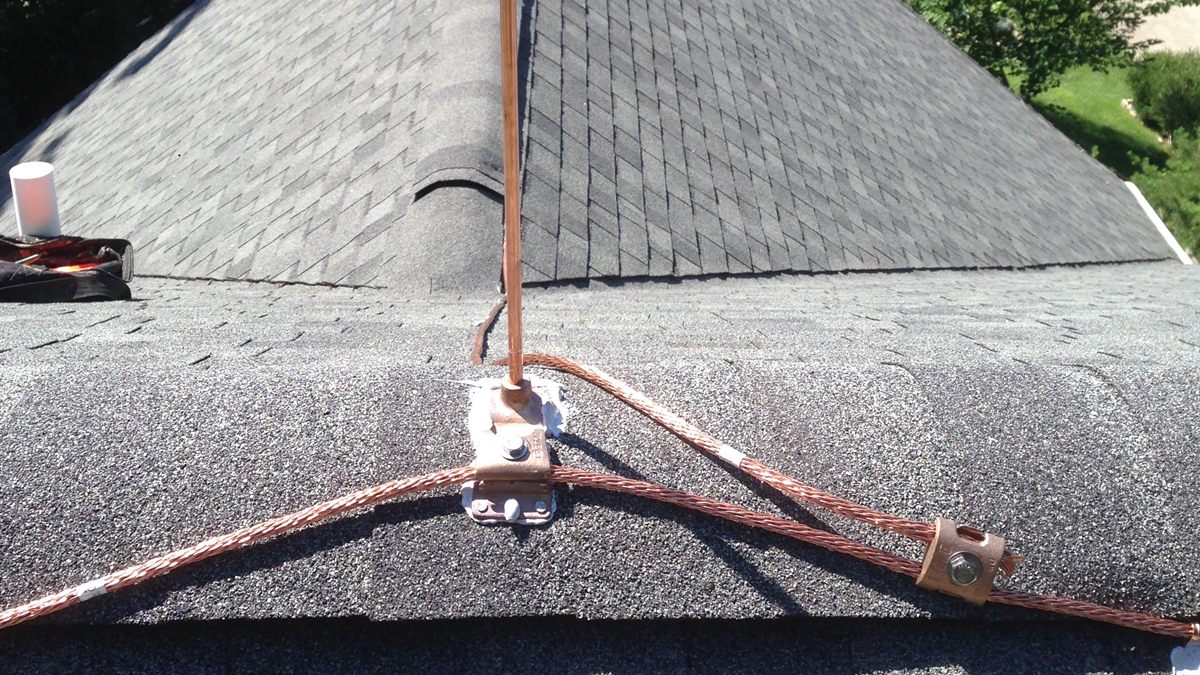
What it looks like on your house
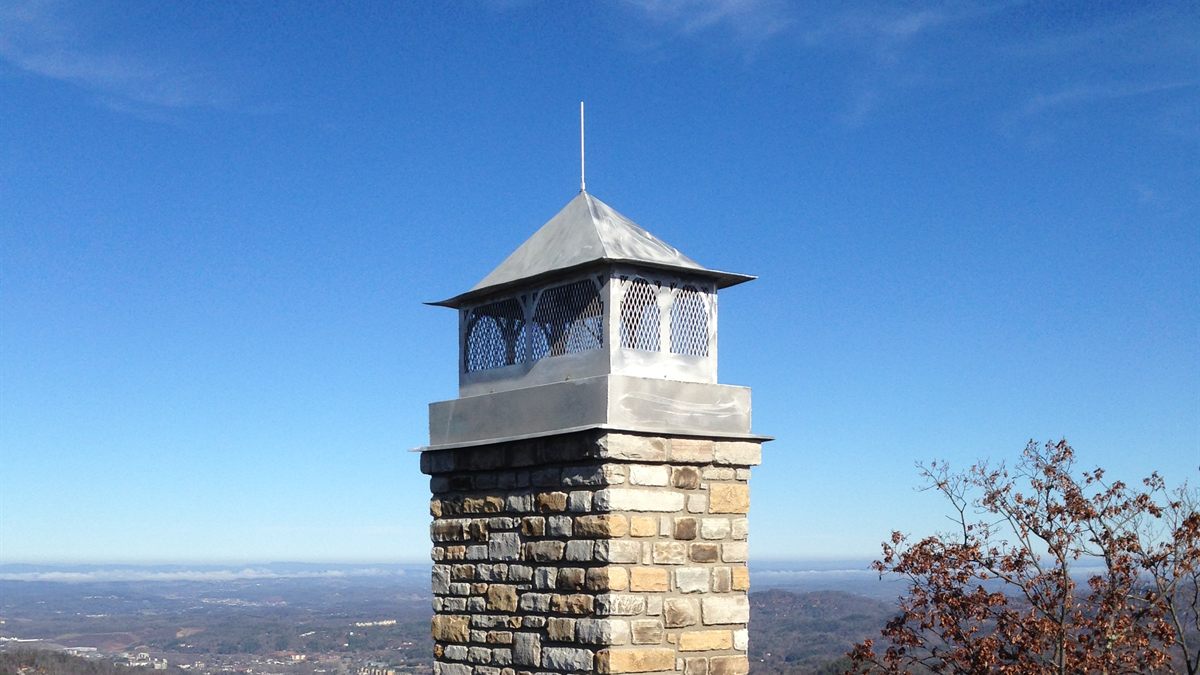
Less than most people expect. The air terminals are slim rods, usually about a foot tall, spaced along the ridges and set on chimneys. The cables are routed where they show least: along ridge lines, behind downspouts and down the back corners of the house. We use copper or aluminum, whichever suits your roof and trim.
On a new house, tell us early. The cables can be run inside the walls and attic while the house is being framed, so almost nothing shows.
What affects the cost
Every house is priced from its own roof. The main things are:
- The size and shape of the roof: the number of ridges, dormers and chimneys.
- The height of the house.
- Copper or aluminum.
- New construction, where cables can be hidden, or an existing house.
- The ground. Rock, which East Tennessee has plenty of, makes grounding harder.
- Any trees you want protected at the same time.
You get a written estimate before any work starts.
How the job goes
- Send us the address and a few photos of the house. For a new house, send the plans.
- Our Master Installer lays out the system and we send a written estimate.
- Our own crew installs it. Most homes take one to two days.
- The finished system can be inspected and certified by a third party.
Common questions
Do lightning rods attract lightning?
No. A rod does not reach out and pull a strike in. It only gives a strike that was already headed for your roof a better place to land.
Isn't my house already grounded?
Your electrical system is grounded, which protects against electrical faults. That grounding is not built to carry a lightning strike, and it does nothing for the roof and structure.
Aren't surge protector strips enough?
They help with small surges on one outlet. They cannot protect the house from a direct strike, and a nearby strike can overwhelm them.
Will my insurance company give me a discount?
Some do for a certified system. Ask your agent; we can supply the paperwork.
Can I install it myself?
We advise against it. A system that is laid out or grounded wrongly can make matters worse, and it cannot be certified. This is specialty work with its own national standards.
We work across East Tennessee, from Knoxville and Sevier County to Chattanooga and the Tri-Cities, and throughout the Southeast.